 Tel.
Tel. 
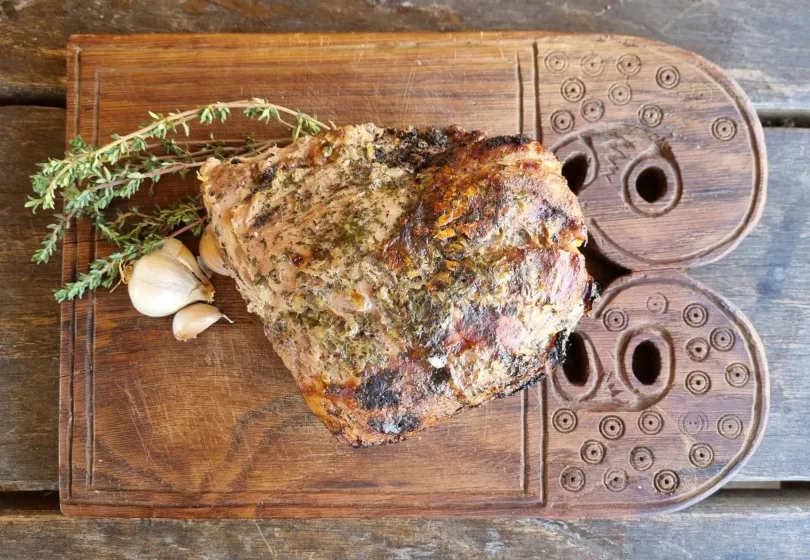
Clay-baked roast
You can wrap all kinds of meat in clay and cook it directly in the embers. For the first couple of times you make this dish, however, it is a good idea to choose a cut of meat with plenty of fat, as this ensures a juicy and tender roast, even if the meat stays in the embers a little too long.
If you decide to cook a whole chicken, it works well to place a red-hot stone inside the chicken before wrapping it in cabbage leaves and clay. This helps ensure the chicken is cooked through. Try also cooking vegetables such as celeriac and other root crops, either baked in clay, in a salt crust or directly in the embers.
Procedure
Start by making a good, large bed of embers.Score the meat and rub it with salt, garlic and herbs. Place the meat on some cabbage leaves, wrap it tightly and tie it with string. Once the meat is fully covered, apply at least a 2 cm thick layer of clay around the cabbage leaves.
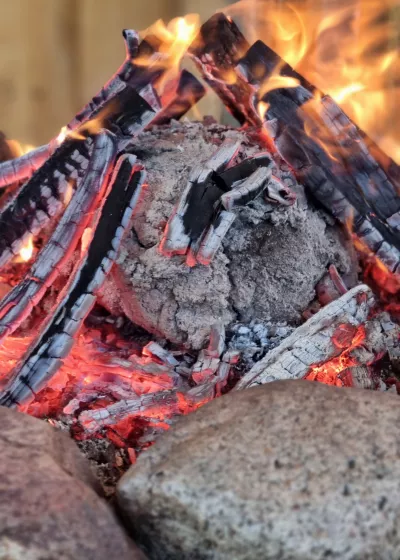
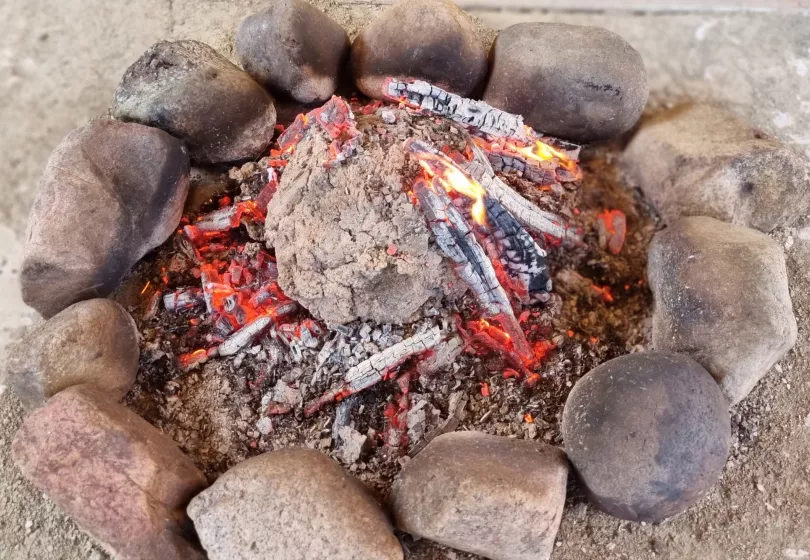
Make a hollow in the centre of the embers and place the roast in it. First pack embers around and on top of the roast, then add kindling. The embers will ignite the wood and create a fire around the roast.
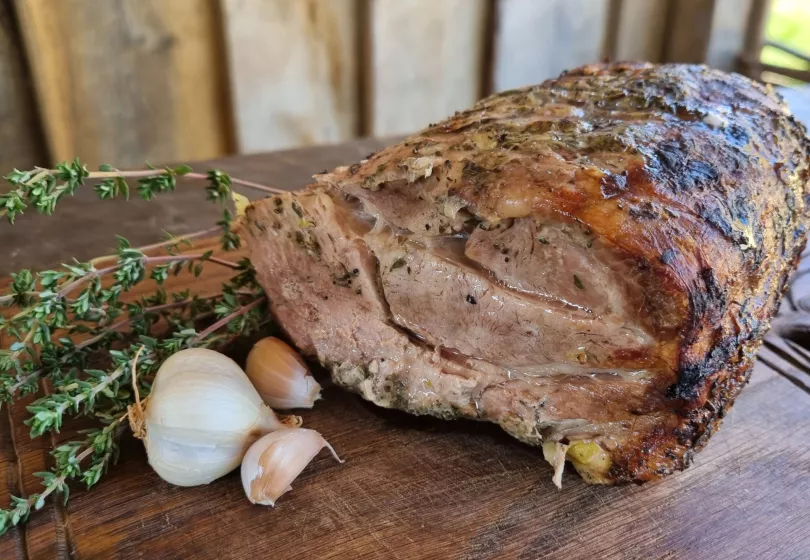
A roast of this size needs a good hour to bake. In the end the clay will be completely cracked. Remove the clay, lift the roast onto a chopping board and take off the cabbage leaves. Let the roast rest for about 20 minutes before serving.
Ingredients
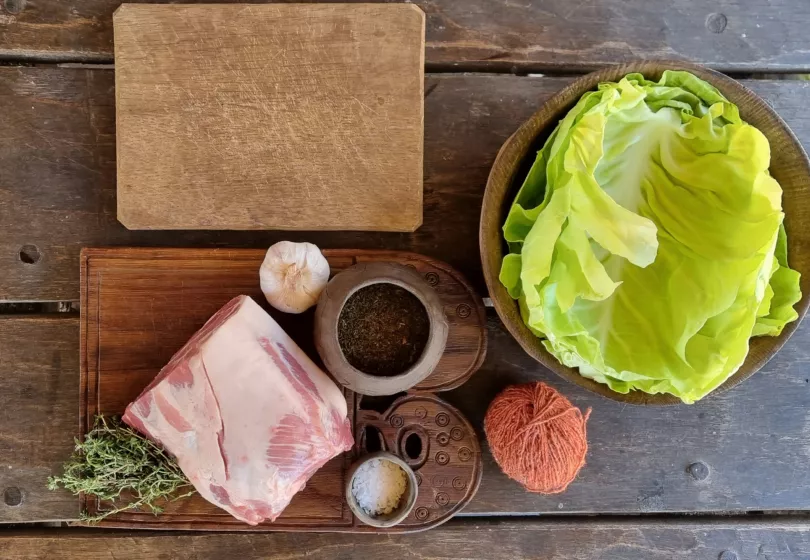
4 persons- 1,5 kg pork neck fillet
- About 10 cabbage leaves
- 3 cloves garlic, finely chopped
- 5 sprigs thyme, finely chopped
- 2 tsp dried marjoram
- 2 tsp salt
- Clay
- Natural string
Cook's notes
If you cannot get hold of clay at all, then a modern salt dough is a good alternative. In the Viking Age, when salt was a luxury, people would certainly not have baked their roast in salt. Clay, on the other hand, was close at hand.